Choosing Your First Database: A Beginner’s Story — RDBMS vs Flat Files vs NoSQL
It started on a quiet Saturday morning. Tareq brewed coffee, opened his laptop, and stared at a blank “Create Account” page for his first real web app. Users, posts, comments—easy enough. But where should the data live?
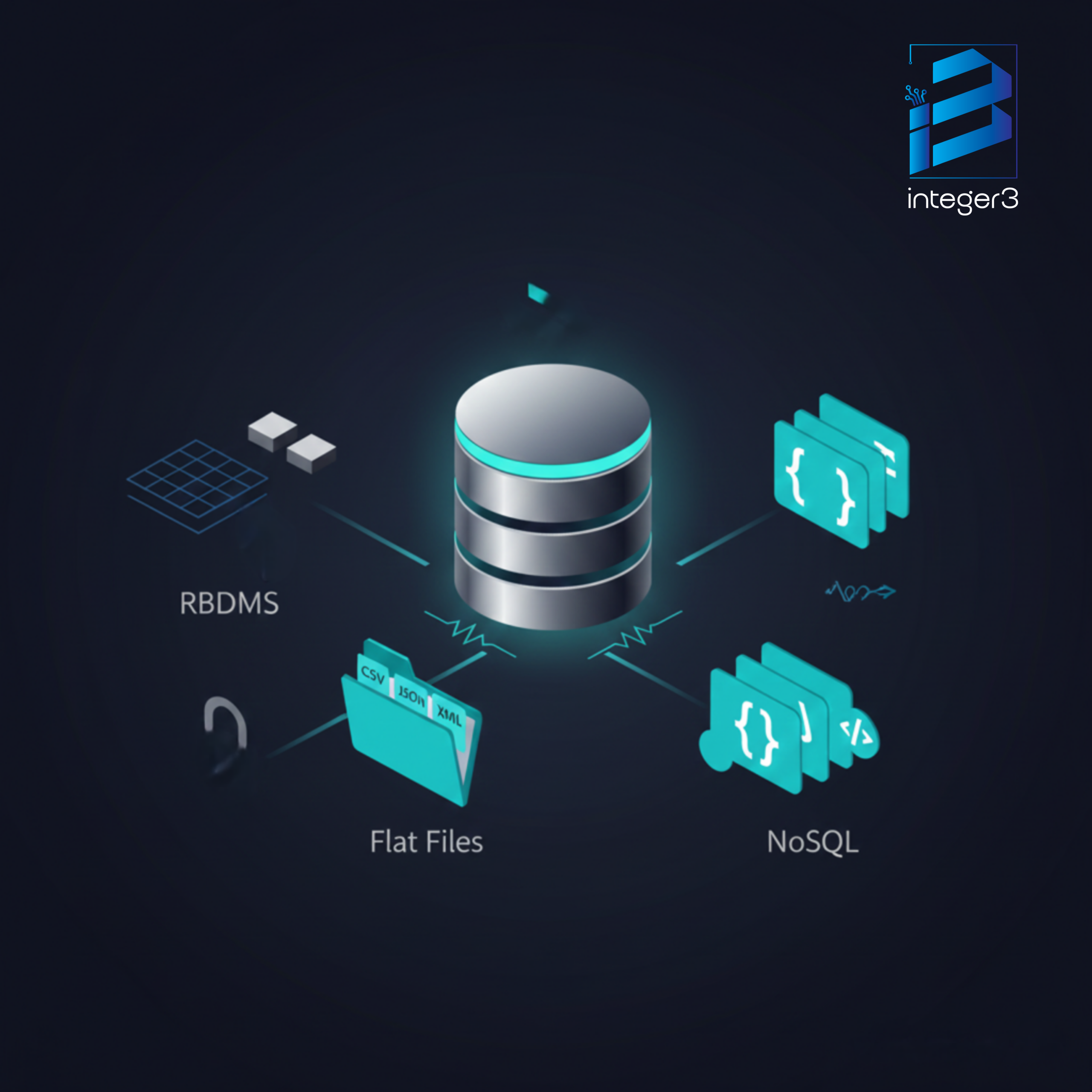
The more tutorials he read, the more choices appeared: flat files like CSV/JSON, relational databases (RDBMS) like PostgreSQL and MySQL, document stores like MongoDB, or even specialized options like Redis, Cassandra, Neo4j, and InfluxDB. Every path promised speed or simplicity or scale. None promised peace of mind.
So Tareq decided to ask one question that would guide everything: “When two people hit save at the same time, will my app survive—and stay secure?”
The Map: What Actually Matters
- Data shape: Tables (rows and columns), documents (JSON-like), graphs (nodes and relationships), time-series (measurements over time).
- Concurrency: Can many users read and write at the same time without corrupting data?
- Consistency: Do you need strict, transactional correctness (ACID), or can you accept eventual consistency?
- Security: Authentication, roles/permissions, TLS (encryption in transit), encryption at rest, auditing, backups.
- Operational effort: Do you want a server, an embedded file, or a managed cloud service?
- Growth: If your app succeeds, will the database scale with you—or lock you in?
With that, Tareq began a walk through Database Town.
Stop 1: Flat Files (CSV, JSON, XML)
“Flat files are like notebooks,” said the Librarian of Files. “You write, you read. No server needed.”
- Strengths: Ultra simple, portable, great for tiny utilities, configs, and data exchange. Versionable with Git.
- Security: No built-in auth or encryption. You rely on filesystem or cloud storage (IAM, bucket policies) for protection.
- Concurrency: Weak. If two writers save at once, you risk overwriting or corrupting the file. Reads are fine, but safe concurrent writes require custom locking or queueing.
- Two-way at the same time (reads and writes): Generally no for multi-user apps. Files don’t offer transactional guarantees.
“Use me for scripts, prototypes, and configs,” the Librarian smiled. “But for a real app with many users? Not wise.”
Stop 2: The RDBMS District (PostgreSQL, MySQL, SQL Server, SQLite)
PostgreSQL and MySQL (and friends)
- Strengths: ACID transactions, schemas, joins, mature tooling. Great default for CRUD apps, analytics, and complex queries.
- Security: Authentication, role-based access control (RBAC), TLS, encryption at rest; PostgreSQL even offers row-level security. Auditing and backups are well supported.
- Concurrency: Excellent. PostgreSQL uses MVCC (Multi-Version Concurrency Control) so readers don’t block writers. MySQL (InnoDB) uses locks and isolation levels to maintain correctness.
- Two-way at the same time: Yes. Simultaneous reads and writes are normal. Transactions ensure correctness; read replicas can scale reads; isolation levels tune behavior.
“Most first apps thrive here,” said the Architect of Tables. “Pick PostgreSQL as your safe default.”
SQLite: The Pocket RDBMS
- Strengths: File-based, zero-config, perfect for local development or single-user apps.
- Security: Depends on filesystem protections; can be encrypted via plugins or disk-level encryption.
- Concurrency: Limited. It can handle many readers, but writes are serialized (WAL mode helps). Not ideal for multi-user server apps.
- Two-way at the same time: Reads and writes can coexist, but with a single-writer limitation. Works for small apps, not heavy concurrent traffic.
“Carry me in your backpack,” SQLite whispered. “But invite my bigger cousins for crowds.”
Stop 3: Document Stores (MongoDB, CouchDB)
In the Bazaar of Documents, data lived as flexible JSON-like records.
- Strengths: Evolve your schema quickly, store nested data naturally, iterate fast.
- Security: Authentication, roles, TLS, encryption at rest; managed services harden defaults.
- Concurrency: Good. Document-level concurrency (often via MVCC or fine-grained locking) lets many users read/write safely.
- Consistency: Single-node can be strong; distributed clusters often offer eventual consistency. Write concerns and read preferences tune behavior.
- Two-way at the same time: Yes, at document granularity. MongoDB supports change streams for real-time updates; CouchDB has replication baked in.
“Pick me when your content morphs,” the Merchant of Documents said, “and you want speed without strict tables.”
Stop 4: The Speed Shop (Redis)
A neon-lit storefront buzzed with counters flipping numbers in real time.
- Strengths: Blazing fast in-memory key-value store; atomic operations; perfect for caching, sessions, rate limits, queues.
- Security: Network isolation, authentication, TLS; persistence options exist, but treat Redis as a performance layer.
- Concurrency: High throughput via single-threaded event loop with atomic commands; clusters and sharding scale out.
- Two-way at the same time: Yes. Many clients can read and write concurrently. But don’t use Redis as your primary system of record for complex data and durability.
“Think of me as your turbocharger,” the Mechanic smiled. “Not the engine.”
Stop 5: The Distributed Plains (Apache Cassandra)
Wind swept across rows of nodes stretching to the horizon.
- Strengths: Horizontal scale, high write throughput, multi-region availability.
- Security: Authentication, roles, TLS, encryption at rest.
- Concurrency: Built for many writers and readers across nodes.
- Consistency: Tunable (QUORUM, ONE, ALL). You trade strict transactions for availability/scale; Lightweight Transactions (LWT) exist for limited cases.
- Two-way at the same time: Yes, across the cluster. Expect eventual consistency unless you configure stricter settings.
“Choose me when uptime and global scale beat strict ACID,” said the Ranger of Replicas.
Stop 6: The Relationship Lab (Neo4j)
A whiteboard filled with nodes and arrows connecting everything.
- Strengths: Graph-first queries—friends-of-friends, fraud rings, recommendations—are easy and fast.
- Security: Authentication, roles, TLS; enterprise features available.
- Concurrency: ACID transactions; concurrent reads/writes supported.
- Two-way at the same time: Yes. Similar to RDBMS behavior but optimized for graph workloads.
“Pick me when relationships are the story,” the Graphologist grinned.
Stop 7: The Time Tower (InfluxDB)
Clockwork gears clicked as streams of metrics flowed in.
- Strengths: Purpose-built for time-series (metrics, events, IoT). High ingest, efficient retention, time-centric queries.
- Security: Authentication, TLS, encryption at rest varies by offering.
- Concurrency: Designed for concurrent writes and reads; retention and downsampling help scale.
- Two-way at the same time: Yes. Built for continuous writes while users query dashboards.
“Use me when time is your primary dimension,” the Keeper of Timestamps advised.
Security Essentials (Whatever You Choose)
- Always enable TLS for connections.
- Use strong authentication and granular roles (RBAC).
- Encrypt data at rest (native features or disk-level + key management).
- Enable auditing/logs; practice least privilege.
- Keep regular backups and test restore; consider point-in-time recovery.
- Isolate networks (VPCs, firewalls, allowlists).
Two-Way Communication Explained (Reads and Writes Together)
Newcomers often ask, “Can I read and write at the same time—and why or why not?”
- RDBMS (PostgreSQL, MySQL, SQL Server): Yes. Transactions + MVCC/locking allow simultaneous reads and writes while ensuring consistency. Read replicas scale reads; isolation levels control trade-offs.
- SQLite: Limited. Many readers are fine; writes are serialized. OK for small/local apps, not multi-user servers.
- Flat Files (CSV/JSON/XML): Generally no for safe concurrent writes. Without robust locking/queueing, race conditions can corrupt data.
- Document Stores (MongoDB, CouchDB): Yes at document granularity. Use write concerns and read preferences to tune consistency; change streams enable real-time updates.
- Redis: Yes for high-concurrency access, with atomic operations. Best for caching/session/state, not complex durable transactions.
- Cassandra: Yes across nodes. Expect eventual consistency unless tuned otherwise; LWT for limited transactional needs.
- Neo4j: Yes with ACID transactions.
- InfluxDB: Yes, built for concurrent ingestion and queries.
Quick Decision Guide (First Project Reality)
- Typical web/mobile CRUD (users, posts, reports): Choose PostgreSQL (default) or MySQL.
- Small/local or single-user desktop app: SQLite.
- Flexible content and rapid iteration with evolving schema: MongoDB.
- Cache, sessions, rate limiting, queues: Redis (alongside your primary DB).
- Global scale, massive writes, availability first: Cassandra.
- Relationship-heavy queries (graphs): Neo4j.
- Metrics and telemetry: InfluxDB.
- Avoid flat files for multi-user transactional apps; they’re great for configs and exports, not concurrent writes.
The Ending: Tareq’s Choice
For his first production app, Tareq chose:
- Primary DB: PostgreSQL — strong security features (TLS, RBAC, optional row-level security), ACID transactions, mature ecosystem, and excellent concurrency via MVCC.
- Performance layer: Redis — for caching sessions and speeding up reads.
- Future-proofing: If his content model becomes highly flexible, consider MongoDB for specific features or services.
- Avoid: Flat files for live user data; keep them for exports, backups, and configs.
He closed his laptop—not with fear, but with a plan. The next time two people hit “save” together, his app would be ready.
FAQs
Can I read and write at the same time?
Yes—on most databases designed for multi-user apps.
- PostgreSQL/MySQL/SQL Server: Yes via transactions and MVCC/locking.
- MongoDB/CouchDB: Yes at document level; configure write concerns and read preferences.
- Redis: Yes, highly concurrent for ephemeral/state data.
- Cassandra: Yes across nodes with tunable consistency.
- Neo4j/InfluxDB: Yes.
- SQLite: Limited (single-writer).
- Flat files: Generally no for safe concurrent writes.
Do I need transactions?
If your app updates multiple related records or must guarantee correctness (e.g., billing, inventory), yes—prefer ACID databases like PostgreSQL/MySQL/SQL Server or Neo4j. NoSQL offers other guarantees and patterns; use idempotent writes and optimistic concurrency when needed.
Is eventual consistency a problem?
For many user experiences, it’s acceptable (e.g., counters, feeds). For strict correctness (payments), prefer strong consistency and transactions.
How do I secure my database on day one?
Enable TLS, create least-privilege roles, rotate strong passwords/keys, enable auditing, encrypt at rest, lock down network access, and take automated backups.
Can I switch databases later?
Yes, but it’s work. Abstract access via your app’s data layer, use migration tooling, and plan for dual-write/dual-read during transitions.
Reach Us: Want more beginner-friendly guides or build a sophisticated software with robust databases and backend architecture? Reach us on Integer3 and get your reliable project with convenient price.

Leave a comment: